
Bridge Books: The Perfect Next Step After Frog and Toad
For many young readers, there comes a moment when picture books start to feel too easy — but traditional chapter books still feel overwhelming.
This is where bridge books (also called transitional early chapter books) become incredibly important.
They help children move from simple early readers like Frog and Toad Are Friends to full chapter books with confidence, independence, and excitement.
If your child is in that in-between stage, the right book can make all the difference.
What Are Bridge Books?
Bridge books are designed specifically for emerging independent readers, typically ages 6–8.
They sit between:
Early Readers
Frog and Toad
Elephant & Piggie
Level 1–2 readers
and
Traditional Chapter Books
Magic Tree House
Junie B. Jones
Boxcar Children
Bridge books help children build stamina and confidence before they tackle longer stories.
They usually include:
• Short chapters
• Large readable font
• Wide spacing between lines
• Supportive illustrations
• Simple but engaging vocabulary
• Clear story structure
The goal is simple: make chapter books feel exciting, not intimidating.
Why Transitional Readers Sometimes Struggle
Many parents notice that when children move from early readers to chapter books, something changes.
Suddenly books become:
• dense
• text-heavy
• visually intimidating
• harder to track line-by-line
Some kids who were confident readers start to feel discouraged.
This is exactly the problem bridge books are designed to solve.
They maintain the sense of progress and accomplishment while still supporting developing reading skills.
Why Charlotte and Henry Works So Well for Bridge Readers
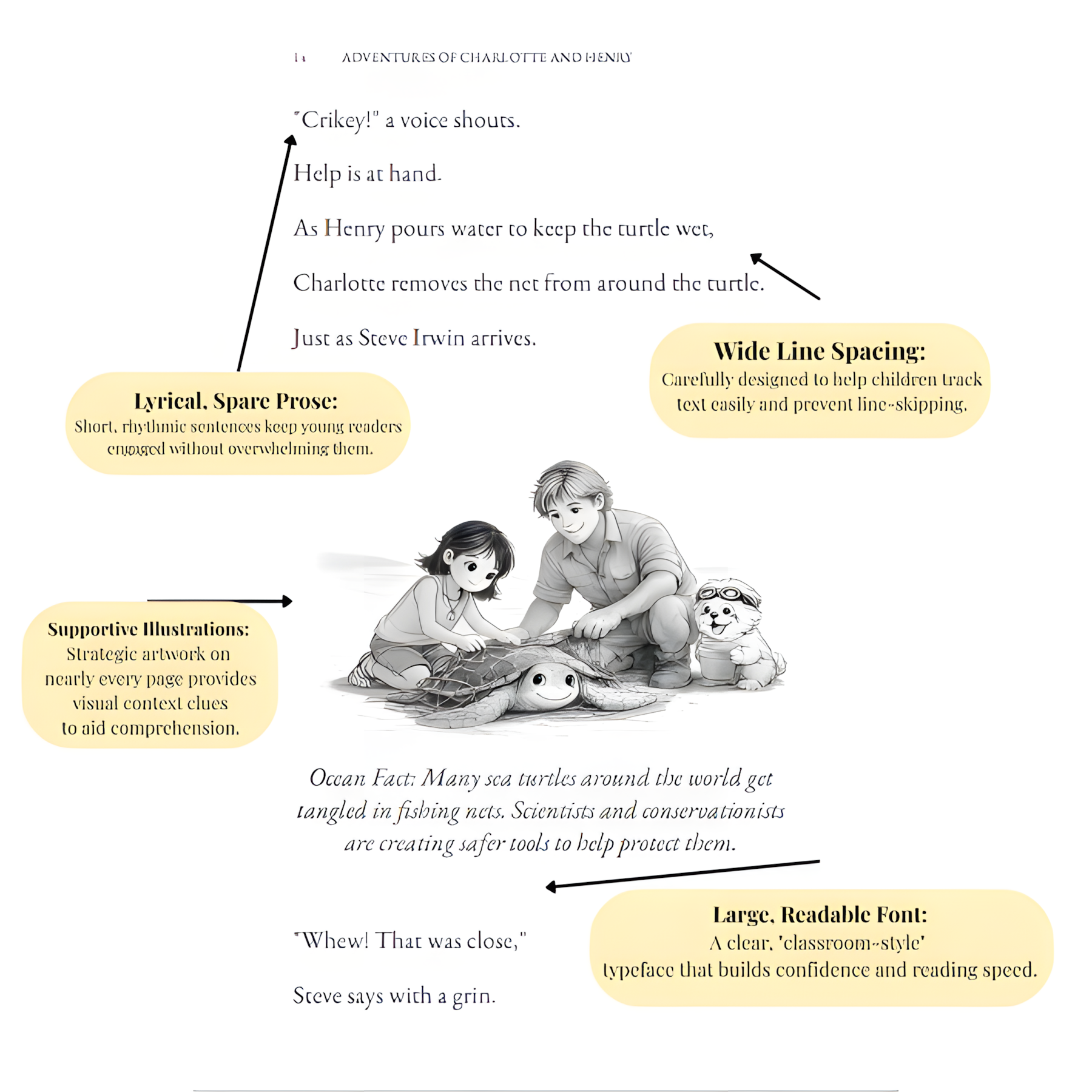
The Adventures of Charlotte and Henry series was intentionally written with transitional readers in mind.
Every design decision focuses on helping young readers succeed.
Wide Line Spacing
Wide spacing helps children track text more easily across the page.
Many emerging readers struggle with line skipping or losing their place. Generous spacing keeps the text visually calm and easy to follow.
The result:
kids can focus on the story instead of fighting the page.
Large, Readable Font
The books use a clear classroom-style font that is comfortable for young eyes.
Large type helps readers:
• recognize words quickly
• maintain reading flow
• reduce visual fatigue
For children building reading stamina, this small design detail makes a big difference.
Lyrical, Short Sentence Structure
Charlotte and Henry stories are written using short, rhythmic sentences.
This creates a natural reading rhythm that helps children:
• process language smoothly
• build confidence
• stay engaged with the story
Instead of dense paragraphs, the prose feels light, musical, and easy to follow.
Young readers often begin reading the story out loud, which strengthens both comprehension and fluency.
Supportive Illustrations
Illustrations appear throughout the book to support comprehension.
These illustrations:
• reinforce key story moments
• provide visual context clues
• give readers natural “rest points” while reading
For many children, illustrations act as anchors that help them stay connected to the narrative.
Adventure Stories That Inspire Curiosity
Beyond the reading structure, the Charlotte and Henry books also introduce children to real-world exploration.
Each adventure blends:
• science
• geography
• exploration
• kindness and bravery
In their first adventures, Charlotte and her loyal dog Henry explore extreme places on Earth — from the deep ocean to the highest mountains.
These stories spark curiosity while keeping the language accessible for developing readers.
Signs Your Child Is Ready for Bridge Books
Your child may be ready for transitional chapter books if they:
• can read simple early readers independently
• enjoy stories but want longer adventures
• feel intimidated by large blocks of text
• like books with illustrations but also want “big kid” chapters
Bridge books help children cross the gap between learning to read and reading for fun.
The Goal: Confident Independent Readers
The biggest milestone in early literacy is when a child realizes:
“I can read real books.”
Bridge books help make that moment happen.
With supportive formatting, engaging stories, and approachable language, books like Charlotte and Henry give young readers the confidence to keep turning pages.
And once that confidence appears — a lifelong love of reading often follows.
Looking for more on bridge books? → Bridge Books Hub
Supportive Blog List:
Why STEM Storytelling Builds Braver, More Curious Kids (Ages 6–9)
How Stories Help Children Build Resilience and Courage (Ages 6–9)
Why Adventure Books for Kids (Ages 6–9) Build Confidence and Curiosity
Link to purchase Adventures of Charlotte and Henry: The Mariana Trench
Back to Home Page